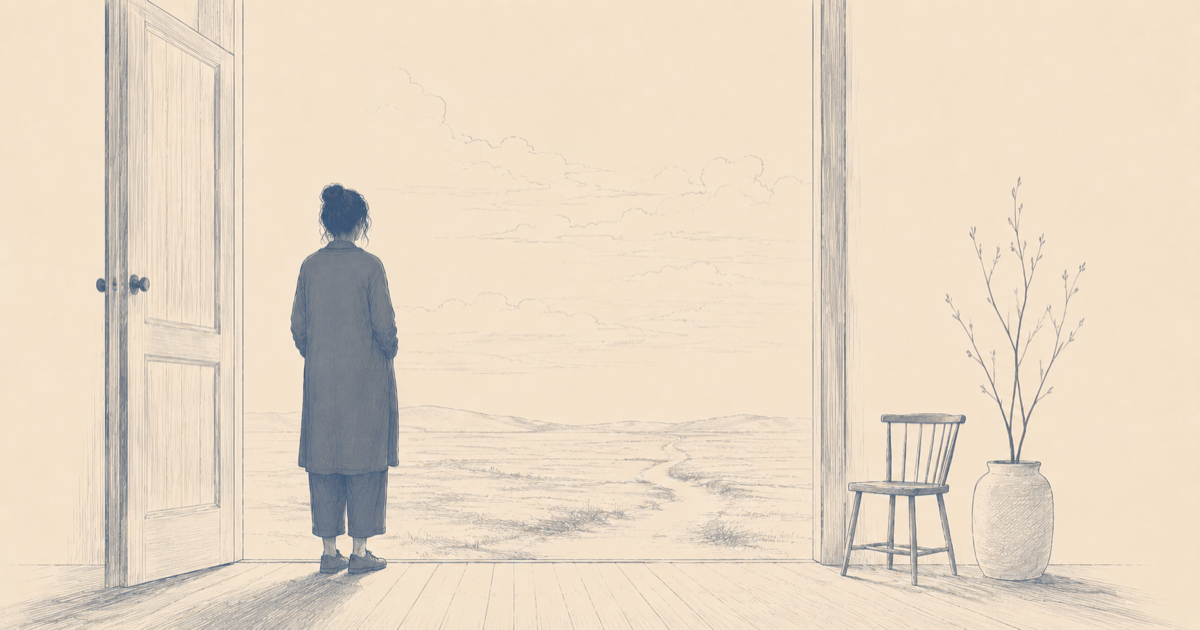
He used to have a label. It was useful. It told people where he stood, organized his identity, gave him a community that asked the same questions.
Somewhere in his late thirties, the label stopped fitting and none of the available replacement labels fit either. Atheist felt too certain in one direction. Spiritual but not religious felt too vague. Agnostic felt like a waiting room.
He stopped using any of them. When people ask what he believes, he says: I’m not sure. For the first time in years, that feels true.
Labels for belief do two things. They communicate position to others. And they constrain the ongoing thinking of the person using them. The label becomes the thing you defend rather than the territory you explore. When the territory changes shape, the label can become a cage.
Removing the label doesn’t mean removing the belief. It might mean making room for it to continue moving.
I’ve felt the relief of not having to defend a position I wasn’t sure of. The freedom of saying I don’t know without it being a failure. The I’m not sure that functions as honesty rather than defeat.
He doesn’t call himself anything. He still thinks about the questions every day. He still notices what he reaches for when things go wrong. He is just no longer trying to name it in a way that other people can categorize.
What does believing something become when you stop needing to defend it?
The unlabeled faith is not incomplete faith. It may be the most honest version. It is still reaching, still asking, still present at the difficult moments. It just no longer needs to pass through other people’s categories to be real.
He doesn’t call himself anything. The questions are still there. He thinks that might be enough.
Some things worth sitting with:
- Is there a label you’re using for your beliefs that still fits, or that you’re maintaining out of habit?
- What would your actual belief look like if you didn’t need a name for it?
- Is there freedom in the I don’t know, or does the not-knowing feel like a loss?
If this stayed with you, He Wanted God to Be Real. He Just Couldn’t Make Himself Believe. moves through similar territory.
Inspired by a real story shared anonymously online.