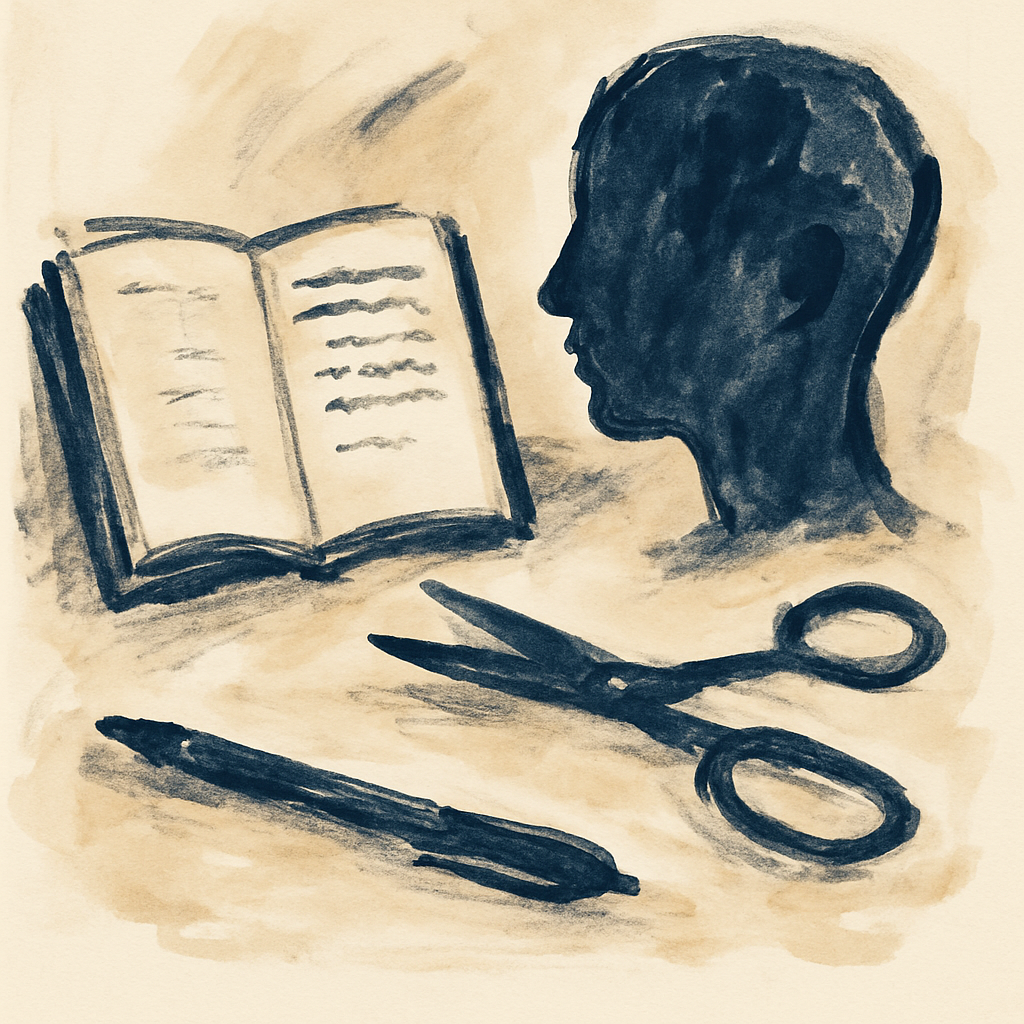
Why do I feel like I wasted my childhood?
She opens a blank notepad. The one where she tracks her to-do list and her monthly payables. And she sits there, staring at it, feeling something she cannot name.
She is an only child. She learned early to keep her thoughts quiet. Not because anyone told her to. Because there was no one to tell them to. No sibling to argue with, no one to witness her half-formed ideas and say “that’s stupid” or “keep going.” Just her parents, and the sense that speaking up meant taking up space that maybe wasn’t hers.
So she learned to edit herself before the words left her mouth. To decide, alone, which thoughts were worth voicing. Most of them never made it out.
We talk about only children like they are spoiled. Like they got all the attention, all the resources, all the room.
We do not talk about what happens when all the attention means all the judgment. When there is no one else to dilute the focus. When every mistake, every mood, every quiet moment lands on one person.
Some only children learned to fill the silence with performance. Others learned to stay very, very still.
She is an adult now. The notepad is hers. The thoughts are hers. But the reflex is still there.
The pause before speaking. The editing. The quiet collapse of an idea before it becomes a sentence.
She wonders sometimes if other people do this. If everyone has a committee in their head deciding which thoughts deserve air. Or if this is what happens when you grow up as the only witness to yourself.
She does not know if she is repressing her voice or if she just never learned to trust it in the first place.
What do you do with a voice that was never allowed to be wrong out loud?
There is something specific about learning to self-edit in childhood. Not because someone punished you for speaking. But because there was no one to practice on. No low-stakes conversation where you could say something dumb and have it forgotten by dinner.
Every sentence mattered. Every opinion was on the record.
Some only children become loud to compensate. They learn to fill rooms, to never let silence settle. Others go the opposite way. They learn that silence is safer. That the thoughts in your head cannot disappoint anyone.
Both are forms of survival. Neither feels like freedom.
Sit with this:
When you were a child, was there anyone you could say the wrong thing to without consequence?
Do you still edit your thoughts before you speak them, even when no one is judging?
What would it feel like to voice an idea that was not fully formed, just to see where it went?