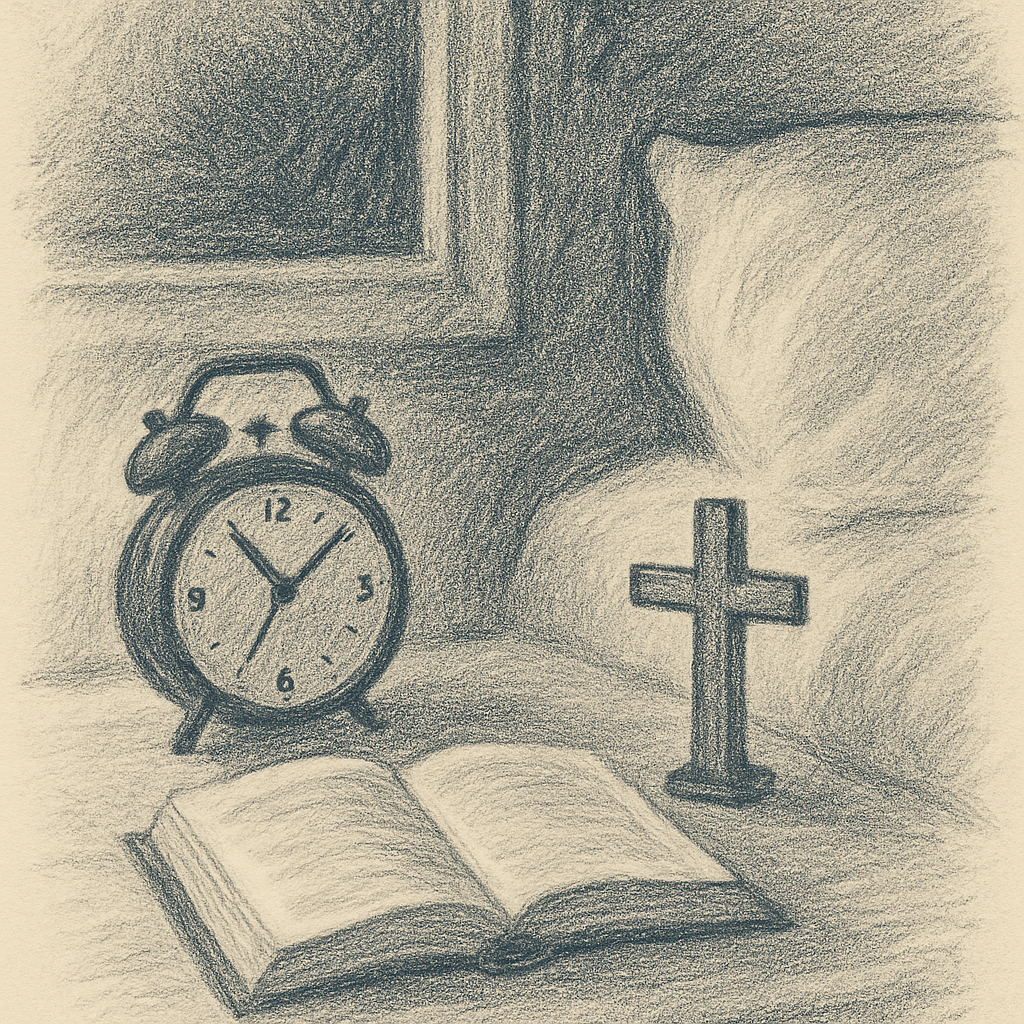
Why do I feel distant from God all of a sudden?
She wakes at 3am and cannot remember the last time she prayed without hearing a question underneath it. Not from someone else. From herself. The words are still there. The habit holds. But something has moved and she does not know when it left or why.
She can list the reasons. She can recite what she was taught. None of it lands the way it used to.
What if I’m wrong, she thinks, and the thought does not feel like curiosity. It feels like betrayal.
The distance does not announce itself. It arrives slowly, a room that empties while we are still standing in it. One day the words we have said our whole lives sound like someone else’s voice coming out of our mouth. The hardest part is not the doubt itself. It is the fear that doubt means we were never holding anything real to begin with.
She prays to want to pray. She asks for faith and wonders if asking proves she still has some or confirms she has lost it. The martyrs faced fire. She cannot get through a Tuesday.
There is a line in Mark about a father whose son is dying. Jesus offers healing and the father says, I believe. Help my unbelief. Belief and its opposite living in the same sentence. Both of them true at once.
What she knows is this: the distance feels sudden but probably was not. And the fact that it frightens her means something has not let go yet.
Maybe this is what faith looks like when it is not performing. When it is just us and the thing we are afraid we have lost, still talking.
The question is not whether doubt disqualifies belief. Plenty of us have lived long enough to know they coexist more often than we admit. The question is what we do when the gap opens and we find ourselves standing on both sides of it.
Some of us stop praying. Some of us pray harder. Some of us pray differently, with less certainty and more honesty, and discover that might have been the point all along.
The psalmists did not pretend. They wrote their doubt into scripture and no one struck it out. Sarah laughed at God’s promise. Moses hesitated. If the people held up as examples of faith carried contradiction, maybe the rest of us are allowed to as well.
There is a difference between walking away and walking through something we do not yet understand. One ends the conversation. The other keeps it open even when the answers do not come.
Sitting with this:
What does it mean if doubt is not the opposite of faith but part of how it breathes?
If she has stopped praying because the words feel empty, what would it mean to pray that instead?
What if the gap she feels is not distance from God but the space where honesty finally has room?